
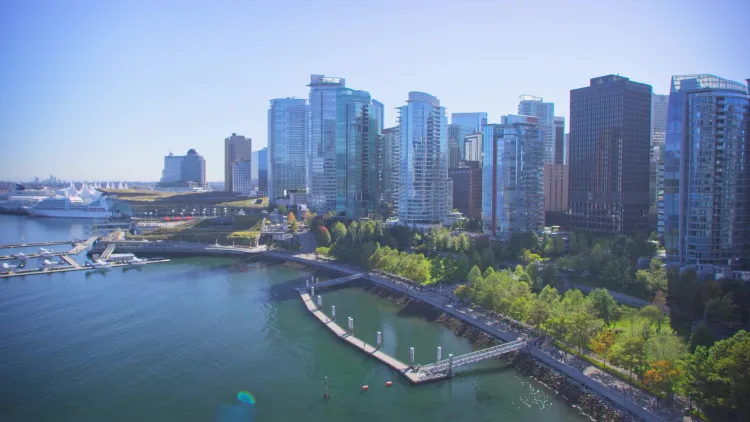
Why do people assume that demand for expensive apartments is fraudulent?
If you follow housing news in Canada at all, you’re surely familiar with two competing ideas for what’s to blame for the housing crisis. The first is what can be called the market thesis, which holds that housing is expensive because the supply of housing in desirable urban areas has not kept pace with demand, forcing bidding wars on what homes do get built. In this view, the solution would be to pull regulatory levers in order to stimulate more housing construction, resulting in more supply and lower prices.
The second is the anti-corporate thesis that new housing is essentially just an investment for corporations with a stake in the price going up. This thesis implies that high prices create a doom loop of speculative demand, pushing the price ever higher. The solution in this case is to stop building profitable high-rises and instead build more “family-style” units, force developers to sell some or all of their units at discounted prices, or even to get private money out of the housing sector entirely.
The latter view is very widespread, but it has a fatal flaw that prevents me from being able to believe it; it rests on the evidence-free assumption that no one would ever actually want to live in expensive new apartments.
Why does a for-profit corporation do anything? To make money, of course. In order to make money, especially off of something as expensive to build as a high-rise housing project, a corporation needs to be very sure that there is someone who is actually willing to pay for it. Oftentimes, this is a homebuyer or renter who intends to live in the building. Alternatively, this someone may be an investor, but those investors are doing this because somewhere down the chain someone is forking over the money to actually live there. If there isn’t someone living in these homes, then the whole enterprise is losing money (or will eventually), and the investment will not be recouped. This would be a massive failure.
Of course, corporations are famously wrong about what the market wants all the time, and financial bubbles where speculative frenzy drives prices well above the actual value of a product to its end users are as old as capitalism itself. However, I find it extremely hard to believe that this is what is going on here, because we can track whether or not the housing is being used for anything.

Rendering of the notorious “Safeway Megatowers” at Commercial-Broadway Station. The cost to rent for an apartment on the left is surely lower than to rent one of the larger homes on the right, but that’s strangely absent from the discussion. Image source: Vancouver Sun
What we find when looking at the data is that vacancy rates for all kinds of housing in major cities have recently increased after being rock-bottom for decades, yet they remain extremely low nationwide. For context, 3% is the low end of the range for what is typically considered a healthy vacancy rate. According to the CMHC as of 2025, the vacancy rate for purpose-built rentals is 5% in Calgary, 3.7% in Vancouver, 3% in Toronto and Ottawa, 2.9% in Montreal, and 2.7% in Halifax. These figures are even smaller for condos.
Of course, the CHMC vacancy figures are specifically about housing that’s on the market but not been sold, but the most common version of this argument raises the spectre of homes being hoarded with no one inside. There was a rash of headlines several years ago about there being over 1.3 million vacant homes in Canada (see here, here, and here). Fortunately for us, the census records how many dwellings are “not occupied by usual residents”. This would include everything in the CMHC’s definition of vacancy, but also:
- Buildings that had recently finished construction but hadn’t filled up with residents yet
- Homes only occupied part of the year, such as student or vacation homes
- Homes where an agreement to buy or rent has been signed but the new resident hasn’t moved in yet
- Abandoned buildings or buildings slated for demolition
- Homes undergoing renovation
- Other miscellaneous reasons, which would include homes that are hypothetically being withheld from the market as a safety deposit box or for the sake of market manipulation
Counting all of these together (most of which are normal parts of a healthy housing market) as of the spring and summer of 2021, we see…5.5% in Vancouver and Toronto, 5.2% in Calgary and Ottawa, 5% in Halifax, 4.8% in Montreal. , if there is an epidemic of hoarded homes, it’s not showing up anywhere in the data. In other words, for the overwhelming majority of all types of housing, big and small, someone is either living there (and presumably agreed to pay to do so) or intends to in the near future.
There are many reasons that have been floated as to why a passive income stream that generates zero real income is actually a good investment strategy, but none of them pass muster. The most commonly cited is that it’s a convenient place to park money in an appreciating asset without the hassle of dealing with tenants, but it can also be an appreciating asset where you are earning rent income on top of that. For this worldview to be true, it would require developers and their clients to be more lazy than they are greedy, and I say with confidence that that doesn’t pass the smell test.
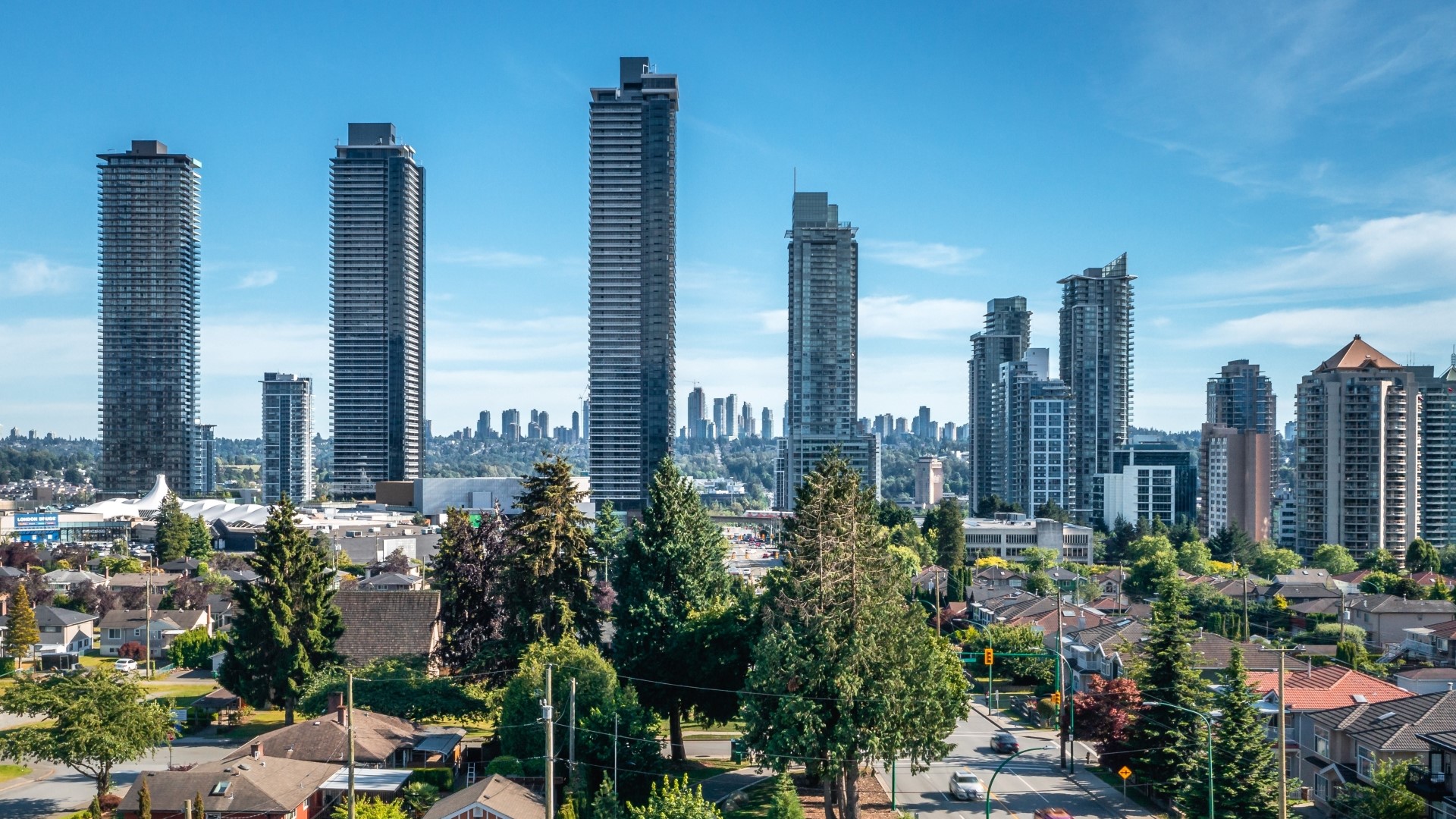
Detached housing and tower blocks in a tense standoff in Burnaby. Image source: City of Burnaby
And yet it seems oddly difficult for many people to accept this. “Vacant condos for foreign money laundering” was the bogeyman du jour when I first came to Vancouver in 2018, to the point where the then-new NDP provincial government launched an inquiry into it when it assumed office, and continues to pop up in places like Toronto, where a vacant homes tax was imposed in 2017, and Ottawa, which got in on the action in 2022.
Tune into a council meeting for any moderately-sized development project (take this one in Surrey, for just one example) and hear politicians, commentators, or members of the public talking about how we need to “build housing for people, not investors” or otherwise suggesting that no one in their right mind would ever want to live in a new small apartment.
To get around the fact that people clearly do want this, or are at least willing to settle for it in exchange for living at that price point in that location, we have to make assumptions that say more about the people making them than the actual economics of the real estate market: that the people driving up demand enough for these places to be profitable are either completely fictitious or don’t count.
This is where you get speculation about whether properties are being held vacant or are simply a place to park money overseas, in which case the demand comes entirely from real estate money cannibalizing itself like in the “bubble” scenario. Alternatively, they’re entirely for yuppies, gentrifiers, singles, wealthy foreigners, or short-term rentals – in other words, that the wrong kind of people want to live there.
Leaving aside that these people also need somewhere to live, pretending that this is proof that something shouldn’t be built and warrants no further consideration because this doesn’t really count as housing demand is refusing to grapple honestly with the housing crisis. “If you don’t build it, they won’t come” is not a plan, it’s wishful thinking easily disproven by data.
A glass condo box does not create yuppies through spontaneous generation any more than a bucket fills up by attracting rainstorms. You wouldn’t build a drainage system counting only water from streams you deem to be valid and worth counting, and yet that is how we approach housing.
I believe that much of this is cultural. Here as in much of the Anglosphere, the baseline assumption is that the ideal is to own a detached house in a low-density neighbourhood and that everyone should be working towards this life.
In this view, apartments are an unfortunate but necessary concession wherein people who cannot afford the ideal sacrifice their quality of life in order to live somewhere cheaper, until they build the wealth necessary for a “real” home. A great amount of North American urban planning energy is dedicated to protecting people from the indignity of having to live in an apartment, or protecting “proper” residents from being near them.

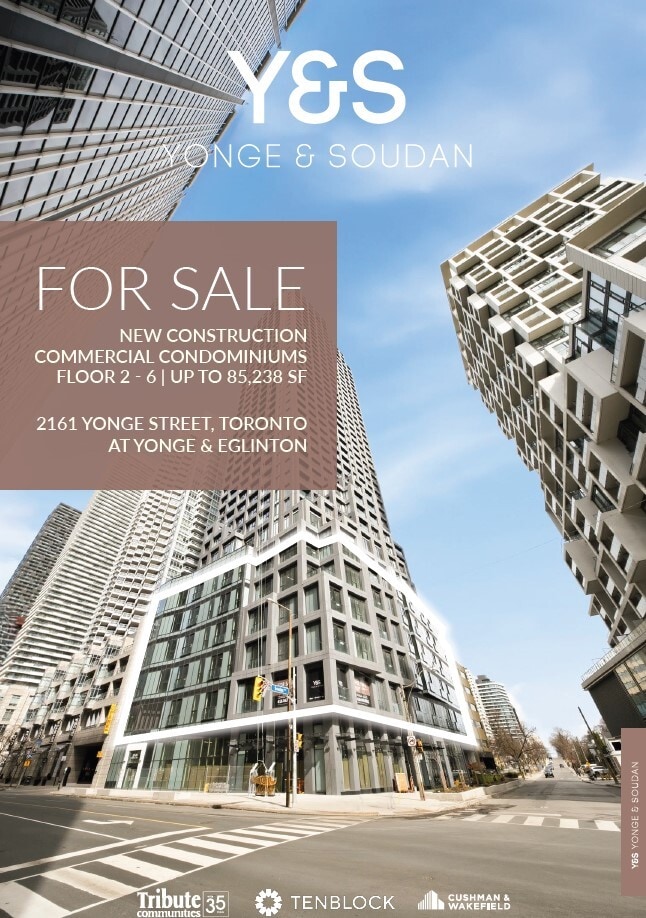
Above: Wholesome, middle-class part of life. Below: Evil soulless encroachment by the elite. Image sources: Canada Real Estate Magazine (above),LoopNet.ca (below).
Under this paradigm, what place is there for people who could afford to live in a detached house but choose not to? They must be some kind of degenerate, or culturally incompatible foreigners, or a smokescreen for some grey-market business, or not even real to begin with.
This is how you get US Senator Elizabeth Warren striking a distinction between “apartments”, where corporate ownership is acceptable, and “homes”, where it isn’t, or people in Facebook groups talking about how developers only ever build “unaffordable housing that nobody wants”.
The existence of expensive apartments should be impossible in this worldview, because they are essentially charity for the poor souls who can’t get a real home. In this model, nobody in their right mind would take lower-frills housing in exchange for a better location or amenities unless they absolutely had to. People buy budget models of all sorts of things from plane tickets to TVs, but in this country, the idea of trading floor space for location is beyond comprehension.
It’s certainly plausible that many people or families would take bigger units if they had the choice, but a 1 or 2 bedroom unit evidently is a tradeoff many can live with if it fits with their budget or location preferences. I myself know plenty of people who have done exactly this.
The logic of measures like vacant home taxes is that since no one could want to live there, it must be for speculative hoarding, and so it must be made unattractive to developers and investors. There is nothing wrong with policies like that aimed at forcing more units on the market, but evidence suggests it only applies to a very small proportion of units.
No one seems to want to reckon with the fact that choosing to live in an apartment happens all the time, and that there’s nothing outlandish or wrong about it. Indeed many prefer it – like singles or couples looking to get away from the hassle of roommates or nosy basement-suite landlords, or seniors looking to downsize. Yet these preferences are treated as invalid or nonexistent.
This is tremendously damaging for housing discourse, and for our society as a whole. We are getting a warped view of how people are moving around our housing markets and how they are priced by pretending that everyone has the same preferences.
It would help us all if everyone understood this assumption for what it is, or stated it outright. We could make it official policy that apartments should only be for the poor and that everyone should be made to go to bigger homes once they hit a certain income threshold. We could make it so that only subsidized or public apartments are built at below-market prices and means-test the rest away.
I don’t think that’s actually what people want, however. It’s a psychological gap that we don’t even notice but accounts for a shocking amount of discussion and policymaking, leading us to chase phantoms and cut around the problem’s edges. We may dislike it, but there is clearly substantial demand across the income spectrum to live in these “shoeboxes”. It’s about time we accept the full picture for what it is. It can be worked around or treated as a problem to be managed, but we must accept that it exists.
Page image credit: Destination Vancouver

Leave a Reply